What fifteen years of scope conversations taught me about saying no
How I handle a new feature request mid-project: check if the date is firm, agree on priority, move a feature to a later phase, or scope a change order.
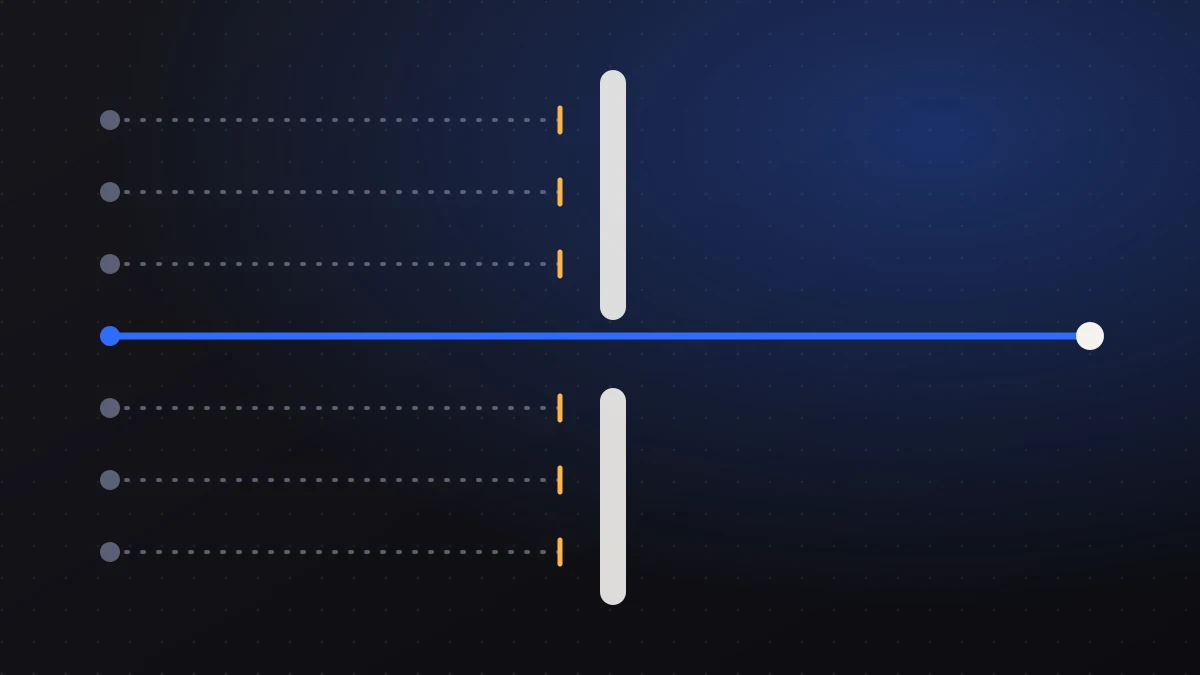
The short answer: Don’t negotiate against the client. Negotiate against the constraint. Most of the time, the request is a new feature. If the date is firm, we agree on what matters most, and a lower-priority feature moves to a future phase. If nothing can move, I look at extra resourcing and a change order, as long as the new feature’s complexity and estimate make it possible. The client owns the choice. My job is to make the trade-off visible fast enough that they get to make it.
Nobody hires a delivery lead for their ability to say no. They hire you for the ability to say no in a way that keeps the relationship intact and the program on its feet.
The most valuable sentence in delivery
“Yes, and here’s what moves.”
It isn’t a refusal. It’s a yes with the bill attached. The client gets what they asked for, and they see exactly what it costs in time, money or something else they wanted.
The three dials
| Dial | What moving it looks like |
|---|---|
| Date | We add the request and launch later. |
| Budget | We add the request with extra resourcing, and the cost goes up (a change order). |
| Scope | We add the request and move a lower-priority feature to a future phase. |
You can’t move none of them. That’s the “quiet yes,” and it’s the one that kills programs.
Why a quiet yes is worse than an awkward no
What kills programs is a quiet yes. Someone in a meeting nods to keep the peace, the estimate never changes, and eight weeks later the team is absorbing it in overtime.
I’d rather have an uncomfortable ten minutes in week three than a much worse conversation in week eleven. By then, the trade-off is no longer a choice. It’s a surprise.
What usually happens: a new feature request
Requests for something new in the middle of a project are common, and most of the time it’s a new feature. What happens next depends on the client, the SOW and the relationship. But the path I follow usually looks like this:
- Check the date. Is the launch date firm, or can it move? If it can’t move, the conversation is about priority, not about squeezing more in.
- Agree on priority. Is the new feature more important than something already in the plan? If yes, that other feature moves to a future phase. The client gets what matters most now, and nothing gets quietly dropped.
- If nothing can move to a future phase, look at resourcing. That means extra people or time, and a change order. Before I promise anything, I check whether it’s even possible, based on how complex the new feature is and what it’s estimated to take.
- Write the decision down. Whatever the client picks goes into the status notes or the change request the same day.
Through all of it, say it plainly and show the math. The client can’t make a good choice without the trade-off in front of them.
What that can sound like (an illustrative example)
This isn’t a quote from a real meeting. It’s how the conversation can go.
Client: “We’d love to add a new feature before launch.”
Me: “We can look at that. The launch date is fixed, so let’s talk priority. Is this more important than anything already planned for launch?”
Client: “Honestly, yes. It matters more than one of the other features.”
Me: “Then here’s what I’d suggest: we build the new one now and move that other feature to a future phase. If you’d rather keep everything in this phase, the other route is extra resourcing and a change order. I’d need to estimate the new feature first to tell you whether that’s realistic before launch.”
What this looked like on real projects
Making the trade-off visible. On a $1.8M fixed-price Sitecore rebuild, the client fell behind on product data our commerce integration needed. Instead of quietly absorbing the delay, we split the plan into what was truly blocked and what wasn’t. We used the existing bi-weekly governance, demo and retro meetings to keep the client aligned on what had shifted and why, so the resequencing never turned into a silent scope change. The project launched on its original date, more than 7% under budget. (Read the case study.)
When budget is the dial that moves. On a Salesforce consolidation I took over mid-flight, the missing budget tracking from the previous PM meant a change order was unavoidable. I negotiated it so we absorbed part of the added cost rather than passing all of it to the client. Saying “this costs more” was easier because I came in with the full picture and a fair split. (Read the case study.)
How to prepare before the conversation
Most of the work happens before the meeting. Before I walk in, I want three things ready:
- The size of the ask. A rough estimate in hours, and what that means for the date and the budget. Rough is fine. No number at all isn’t.
- Two real options. For example, one that moves a lower-priority feature to a future phase, and one that adds resourcing through a change order. I check with the team first that both are actually doable.
- What I’m recommending, and why. The client still decides, but they deserve to hear what I’d do in their shoes.
If you can’t get those ready by the next meeting, say so plainly: “I need until Thursday to size this properly. Until then, it isn’t in the plan.” That’s still a clear answer, not a quiet yes.
Write the risk down before it happens
The easiest “no” is the one you set up at kickoff. On the Sitecore project, the contract risk register signed at kickoff already said a late product-data API from the client could extend the project. When that risk happened, nobody was surprised. We were following a plan we’d all agreed to.
Mistakes I see (and made)
- Saying “let me check” and never coming back. That’s a quiet yes with extra steps.
- Offering options you can’t deliver just to end the meeting.
- Negotiating against the person (“you always do this”) instead of the constraint (“this doesn’t fit the date”).
- Agreeing to “unlimited” anything. This one’s mine. Very early on, when I owned my agency, Woo Pixels, a client wanted unlimited revisions written into the SOW. It wasn’t something we normally offered, but we accepted it. It turned into a nightmare. We missed due dates and I ended up losing money. Since then, every SOW I write has a revision limit. If a client wants unlimited revisions, it comes at extra cost and affects the timeline.
Why clients prefer this
Say it plainly, show the arithmetic, offer two options you can actually deliver, and let them pick. Every good client I’ve had preferred that to being managed.
If your team needs a senior person in these conversations, that’s what I do as a fractional project manager. If you’re the PM who has to run them, we can practice them together in project management coaching.