← PROJECTS / 02
OPEN SOURCE

Website Screenshot Crawler

Paste one URL. It finds every page on the site (sitemap first, then a headless-browser crawl if there isn't one) and hands back a full-page screenshot of each, streamed live as it captures them.
1 · SCAN REQUESTPOST /api/scan
{ "url": "example.com",
"maxPages": 50 }
2 · LIVE EVENT STREAMSERVER-SENT EVENTS
No sitemap found, crawling links from the homepage...
falls back to a headless-browser BFS crawl over same-domain links
Captured https://example.com/pricing → 007-pricing.png
thumbnail pops into the gallery the instant the file lands on disk
2
DISCOVERY PATHS SITEMAP FIRST, CRAWL FALLBACK
200
MAX PAGES PER SCAN, ADJUSTABLE
0
URLS TO LIST BY HAND IT FINDS THE PAGES ITSELF
CLIENT
Personal infrastructure
PLATFORM
Node.js + Express + Playwright (Chromium)
ROLE
Designer + builder
TEAM
Solo
DISCOVERY
Sitemap first, crawl fallback
Checks /sitemap.xml and /sitemap_index.xml (nested indexes too) before touching a browser; falls back to a same-domain BFS link-crawl over Playwright's own DOM if neither exists
CAPTURE
Concurrency-3 worker pool
autoScroll() forces lazy-loaded content to render before each full-page screenshot
STREAM
One SSE channel per job
every discovered/visiting/captured/error event pushes straight to the browser, no polling
A small Express backend split into a few focused modules: the scanner (sitemap parsing, same-domain link filter, nav-menu prober for JS-heavy sites), a network guard, and the SSE event bus, all running against one in-memory map of jobs. No database: a job's screenshots live on disk for 24 hours, then a sweep deletes the folder. The browser is forced through a built-in proxy that refuses internal addresses.
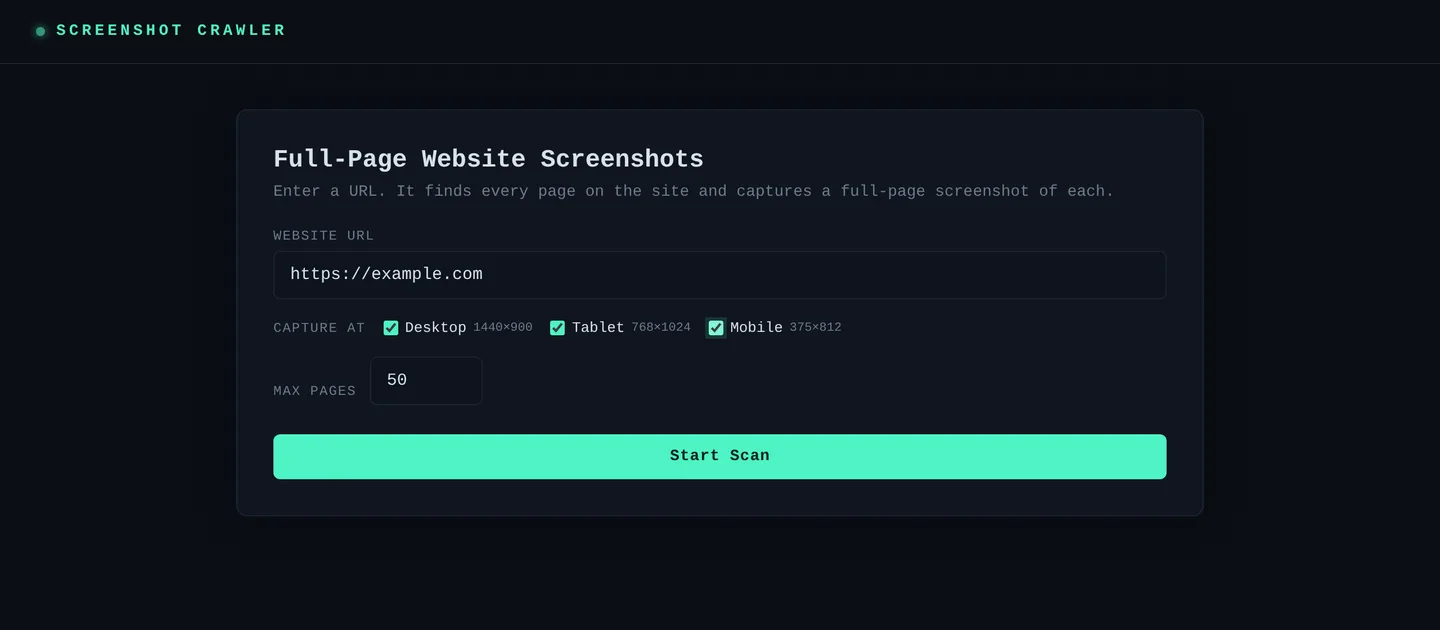
The Website Screenshot Crawler start screen, with a URL field, device size options for desktop, tablet and mobile, and a max-pages field.
SCREENSHOT: SCAN FORM
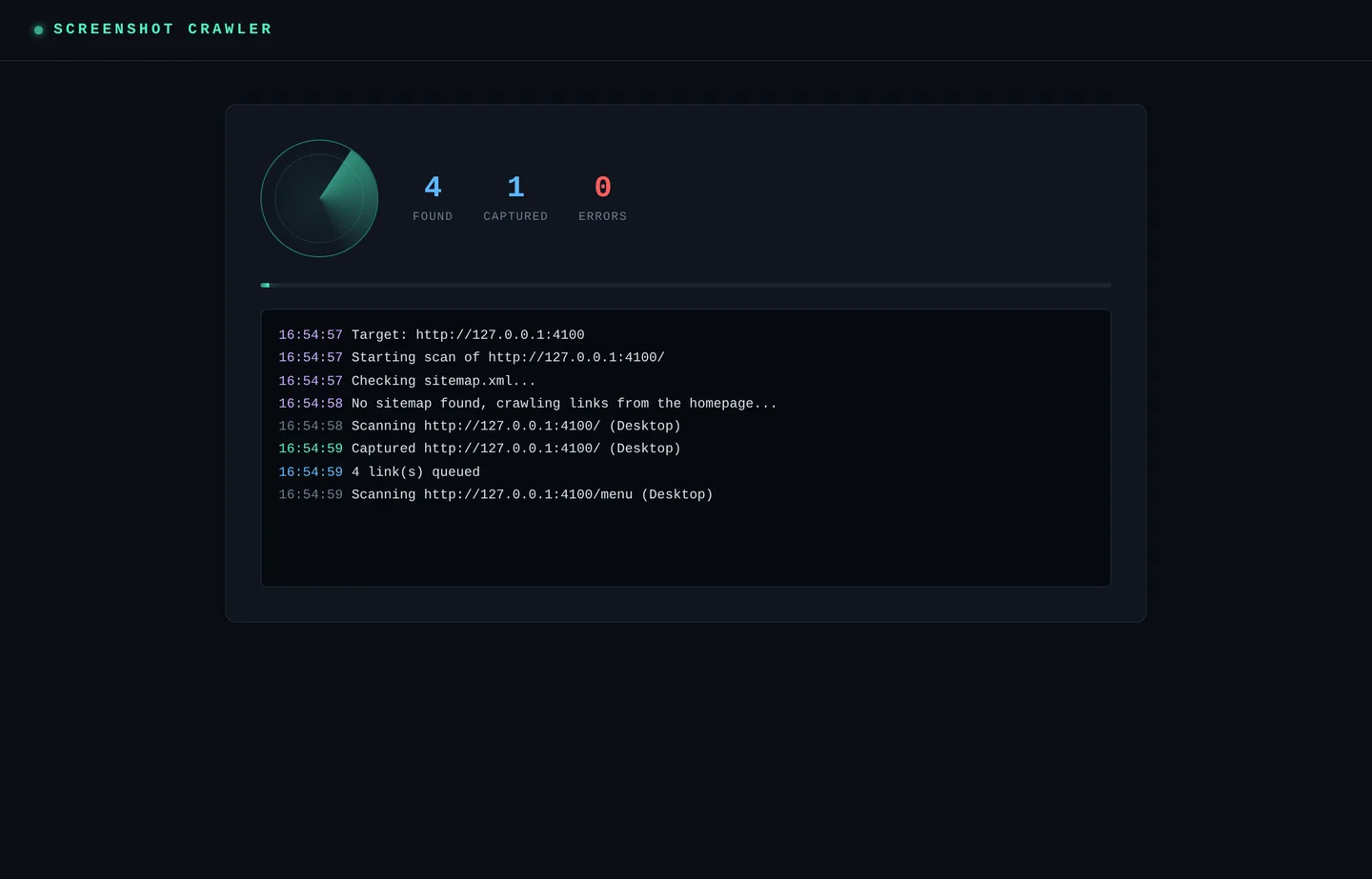
A scan in progress: an animated radar sweep, live found, captured and error counters, a progress bar, and a scrolling log showing the sitemap check falling back to a homepage link crawl.
SCREENSHOT: LIVE SCAN WITH RADAR SWEEP AND TERMINAL LOG
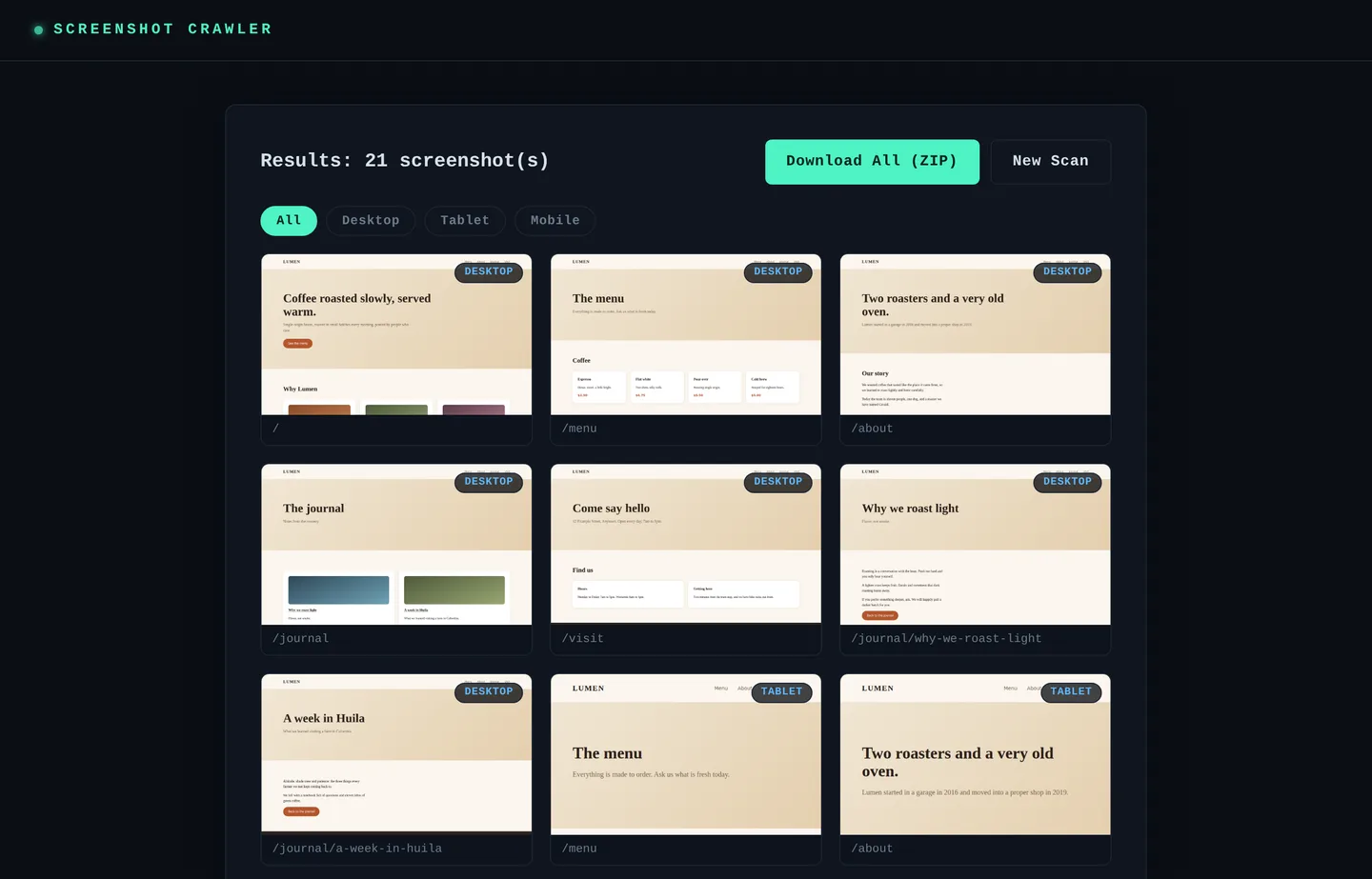
The results gallery after a scan of a sample site, showing desktop and tablet thumbnails with their page paths, device filter tabs, and a Download All (ZIP) button.
SCREENSHOT: RESULTS GALLERY WITH ZIP DOWNLOAD

Sitemap-first discovery covers most sites, but plenty of modern component-library sites (shadcn/ui, Radix-based UIs) don't ship a sitemap and hide their real navigation behind menu or dropdown buttons that only render their child links once clicked. A plain DOM scan for `a[href]` on page load finds none of them, because the anchors don't exist yet.

The crawl fallback compensates by clicking every visible nav and header button before harvesting links, then re-scanning the DOM for whatever the click revealed. Some of those buttons turn out to be full navigation triggers rather than menu toggles, so a click can leave the page somewhere else entirely, handled by capturing whatever links appeared there too, then navigating back to the start URL before continuing. The second failure mode was quieter: Playwright's `fullPage: true` screenshot only captures whatever height the DOM already reports, and plenty of sites don't render scroll-triggered lazy content until it's actually scrolled into view, so a screenshot taken the instant the page loads can genuinely be missing the bottom half. The fix scrolls the page in 400px increments up to its full height before every capture, then resets to the top so the screenshot itself starts clean.

The hardest problem turned up when making it safe for other people to run. A tool that fetches whatever URL you type can be pointed at internal services, so internal addresses are blocked. Testing showed that checking requests in the browser was not enough: a public page that redirected to an internal address slipped through. The fix was to force Chromium through a small proxy that checks every connection, including redirects, images and scripts, and connects only to the address it checked. A regression test now covers that exact case.

Node.js + Express
job API, static file serving, SSE event bus
Playwright (Chromium)
headless browser: navigation, link discovery, full-page capture
Server-Sent Events
live progress streamed to the browser, no polling
archiver
on-demand ZIP bundling of a completed job's screenshots
Need to see every page of a site at once, not one tab at a time?
Thirty minutes, no pitch. We'll figure out if a crawler is actually the right tool for what you're trying to catch.